
News
Tihar Jail is Moving! Delhi Plans a New Prison on City Outskirts.


Representational Image | Source: Business Standard
Delhi Chief Minister Rekha Gupta announced on Tuesday (March 25) that the government will build a new prison on the outskirts of the city to replace Tihar Jail. As part of the 2025-26 budget, ?10 crore has been set aside for surveys and consultancy services to plan the project.
Tihar Jail is the largest and most high-security prison in India. It houses a mix of inmates, including gangsters, politicians, and well-known personalities. The prison was originally built in 1958 with space for just 1,273 prisoners. Over the years, its capacity was increased to about 6,000, but today, it holds over 13,000 inmates—far beyond what it was designed for.
Tihar was first set up in a small village near Delhi and was under Punjab’s administration until 1966, when it was handed over to the Delhi government. It later became the main prison for the capital, eventually expanding into a complex of nine jails. By the 1980s, overcrowding had become a major concern, leading to various reforms.
One of the most significant changes came in 1994 when Kiran Bedi, the first woman Inspector General of Prisons, introduced programs to improve the lives of inmates. These included education, job training, and even meditation sessions, which received international recognition.
Tihar Jail also runs a prison industry where inmates make and sell products like bakery goods, furniture, and textiles under the ‘Tihar’ brand.
With the increasing number of prisoners, the need for a new, better-equipped facility has become urgent. The government’s plan to shift Tihar Jail is aimed at reducing overcrowding and improving prison conditions. The exact location and timeline for the project are yet to be finalized.



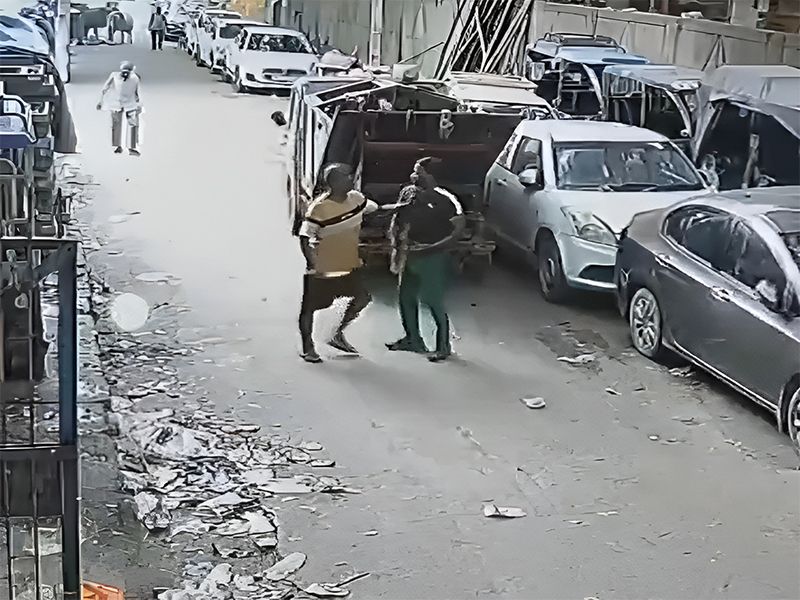
A 28-year-old sanitation worker was allegedly stabbed to death while collecting garbage in East Delhi’s Kalyanpuri on Sunday morning.
The victim, Anil Kumar, worked as a contractual employee with the Municipal Corporation of Delhi (MCD). Police said he was near a garbage collection van when a man came up to him and attacked him with a knife.
The attack was caught on CCTV camera. The 90-second video reportedly shows a man in a yellow T-shirt reaching the spot and looking around. He then walks towards Anil, holds him by the collar and allegedly stabs him several times.
The man then leaves the spot. Two other men can be seen nearby during the attack, but they did not step in.
Anil rushed to hospital after attack
Police said Anil was working as a helper on the garbage collection van. The driver was close to the spot when the attack took place.
After the stabbing, the driver took Anil to a nearby hospital in an e-rickshaw. Doctors later declared him dead.
Police said the suspect has been identified. He is also said to be a private sanitation worker from the same area.
According to the police, the killing may have followed a personal dispute. The suspect is believed to have been angry with Anil and the driver over their visits to his house when he was away.
Police are still checking the exact reason behind the attack.
Warning Disturbing Content
?????? ???? ??? MCD ????? ???????? ?? ?????? ?? ??? ??? ?? ?????? pic.twitter.com/QF45OnFssY
— Sudarshan News Delhi (@SudarshanNewsDL) August 16, 2026
Family demands action against accused
After Anil’s death, his family members and local residents gathered at the hospital and called for quick action against the suspect.
AAP MLA Kuldeep Kumar also reached the hospital and met Anil’s family. He criticised the Delhi government over the law and order situation and asked for financial help for the victim’s family.
Kumar also demanded an “encounter” against the accused.
He said that a worker who leaves home early in the morning to collect garbage had been killed while doing his job.
AAP MLA warns of garbage collection stoppage
Kumar also warned that sanitation workers could stop garbage collection across Delhi if Anil’s family does not get justice.
He said workers would stop their duties until action is taken in the case and the family gets justice.
A police officer later reached the hospital and spoke with the MLA and Anil’s relatives. The officer assured them that action would be taken against the accused.
Police are now investigating the case and checking what led to the deadly attack.
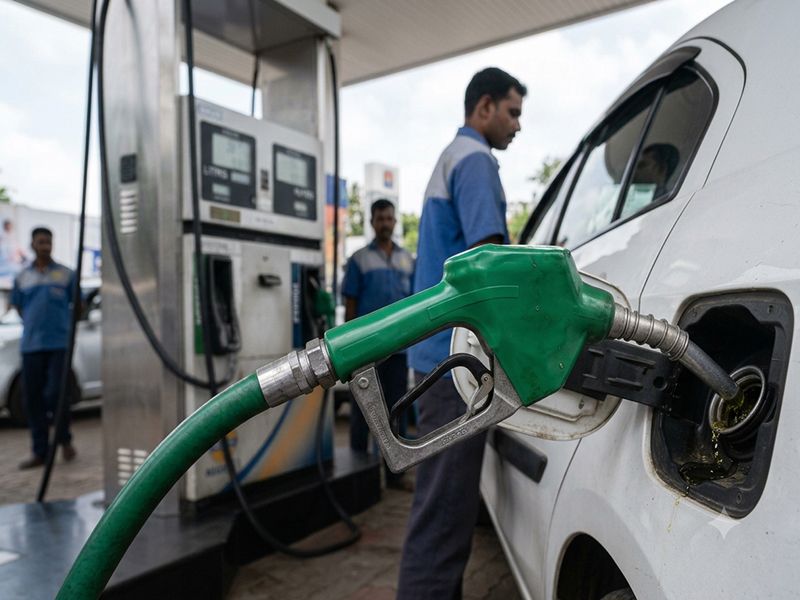
The Delhi Taxi and Tourist Transporters and Tour Operators Association has announced a protest march to Parliament on August 4 against the government’s E20 petrol policy. The group says many transporters are worried that the fuel is affecting older vehicles by reducing mileage, raising repair costs, and causing engine problems. The Central government, however, says E20 fuel is safe, cleaner than regular petrol, and helps farmers by creating more demand for ethanol.
At a press conference on Friday, association president Sanjay Samrat spoke about the concerns raised by transport operators from different parts of the country. Holding sugarcane during the event, he said many vehicle owners have shared complaints after using E20 petrol.
Samrat said several transporters have reported lower fuel mileage and higher spending on vehicle repairs. He also said many owners fear that long-term use of E20 fuel could affect engine life. According to him, many vehicles made before 2015 were not built for petrol with 20 percent ethanol, while newer models are better prepared for such fuel.
The Ministry of Petroleum and Natural Gas has rejected these claims. The Ministry said India’s ethanol blending plan has moved forward step by step over more than 20 years. It also said there is no plan at present to raise the ethanol level beyond 20 percent.
Replying to comparisons with Brazil, the Ministry said ethanol has been used as a vehicle fuel in many countries for more than 100 years. It added that India’s move toward ethanol-blended petrol has been planned through policy changes, investment, and higher production over many years.
The Ministry also said work on ethanol blending started long before the current government came to power. A pilot project began in 2001, the programme was announced in 2004, and petrol with 5 percent ethanol reached several states by 2006. The policy was also published in the Gazette of India in January 2013.
Officials said India first planned to reach 5 percent ethanol blending in 10 states and Union Territories. However, progress was slow, and blending stayed at about 1.5 percent until 2014.
According to the Ministry, the main problem was low ethanol production. At that time, most ethanol came from sugarcane, which is a seasonal crop. Annual production was about 400 crore litres, which was too low to meet higher blending goals.
The government said things changed after the National Policy on Biofuels was launched in May 2018. The policy focused on increasing ethanol production, bringing in more investment, and building the system needed to support higher blending levels. Officials say these steps have helped reduce India’s dependence on imported crude oil while supporting cleaner fuel.
News
Abhijeet Dipke Ends His Hunger Strike After Sonam Wangchuk’s Appeal Before the Parliament March


Image: psuindia.com
Cockroach Janta Party (CJP) founder Abhijeet Dipke ended his hunger strike on Monday morning after activist Sonam Wangchuk asked him to do so while receiving treatment in hospital. Wangchuk’s message was shared by his wife, educator Gitanjali Angmo, from the protest stage at Jantar Mantar. She said Wangchuk wanted Dipke to save his strength for the protest ahead. After the announcement, Dipke broke his fast by drinking juice and then joined the march to Parliament. The father of NEET aspirant Riya Kumari, who died by suicide, also took part in the march.
Dipke and Angmo later got onto a slow-moving truck leading the march as thousands of CJP supporters walked behind them. Using a loudspeaker, Dipke repeatedly raised the slogan, “Dharmendra Pradhan must resign.”
At the same time, senior CJP leader Saurav Das said the Centre had contacted the party for talks. In a post on X, Das said he and party leader Ashutosh Ranka were on their way to meet BJP president J.P. Nadda after the government reached out earlier in the morning. He said the party’s demands remained the same and added that a large number of young people had gathered for the protest. The march was paused while the meeting was taking place.
Dipke began his hunger strike on Saturday after Delhi Police removed Wangchuk from the protest site at Jantar Mantar and admitted him to Safdarjung Hospital. The police said the step was taken because of Wangchuk’s health and the Delhi High Court’s directions. Wangchuk has been on a 21-day hunger strike as part of the CJP protest, which is asking for the resignation of Union Education Minister Dharmendra Pradhan over alleged leaks in competitive exams, including NEET-UG.
Thousands of students and young people from different parts of the country reached Delhi to support the protest. On Monday morning, they marched towards Parliament, where the Monsoon Session is set to begin, to press for their demands. At least five Delhi Metro stations were closed as part of the security plan.
Security was tightened across central Delhi to stop the protesters from reaching Parliament. Around 32 companies of paramilitary forces, with nearly 2,000 personnel carrying riot control equipment and tear gas, were deployed in the area. Delhi Police also asked for 1,400 more personnel after the crowd grew larger.
A few hours before the march began, CJP spokesperson Ashutosh Ranka spoke to the crowd and asked protesters to raise only three slogans: “Bharat Mata ki Jai,” “Inquilab Zindabad,” and “Dharmendra Pradhan istifa do.” He urged people to stay calm and peaceful and warned them not to react if someone tried to provoke them. Ranka said the protest had remained peaceful for the past 30 days and asked supporters to keep the same approach during the march to Parliament.


Delhi Sanitation Worker Stabbed to Death While Collecting Garbage; AAP MLA Demands Action

Delhi Transporters Announce Parliament March Against E20 Fuel Policy

Abhijeet Dipke Ends His Hunger Strike After Sonam Wangchuk’s Appeal Before the Parliament March

IMD Issues Red Alert for Next 12 Hours, People Advised to Stay Indoors

120 kmph winds hit Delhi. Palam hasn’t seen that speed in 25 years.

Delhi Launches Plan for Dust-Free Roads, Cleaner Air and Better Drainage

Delhi Power Cut Alert for June 7: Full List of Affected Areas and Outage Timings.

India May Soon Get Plastic Currency Notes as RBI Reviews Proposal

Delhi-NCR’s Old Trucks and Buses Are in Focus as Centre Clears Rs 9,585 Crore Plan

91 Illegal Colonies in Yamuna Floodplain Come Under Court Focus

Top 50 Most Influential Authors of 2021

Book Review of Debutant Author, T. Shree, ‘What If….’

Top 50 Most Influential Authors of 2023

Top 50 Most Influential Authors of 2022
This Restaurant In Delhi Serves Food Inside An Actual Airplane
First PUBG-Themed Restaurant opens in Jaipur

You Won’t Believe How AI Transformed Bollywood Divas into Stunning Barbies!

Yami Gautam Unveils Her New Avatar in ‘OMG 2’: Get Ready to Be Amazed!

Top 50 Most Influential Authors of 2024.

Exclusive Interview With The Author of ‘Daughter of the Night’ Nandini Gupta

Man Calms Angry Elephant, Tourists Stunned by the Spectacle

DTC Bus Driver’s Seizure Leads to Tragic Collision in Rohini, One Fatality

6 killed, 2 injured in Bus-SUV Collision on Delhi-Meerut Expressway | Video

Viral video alert: Man brushing his teeth on Delhi Metro gains millions of views

Shocking: Man rams car into a group of people after spat with a biker (Video)

