
News
Delhi Families Can Apply for Ration Cards Again After 13 Years

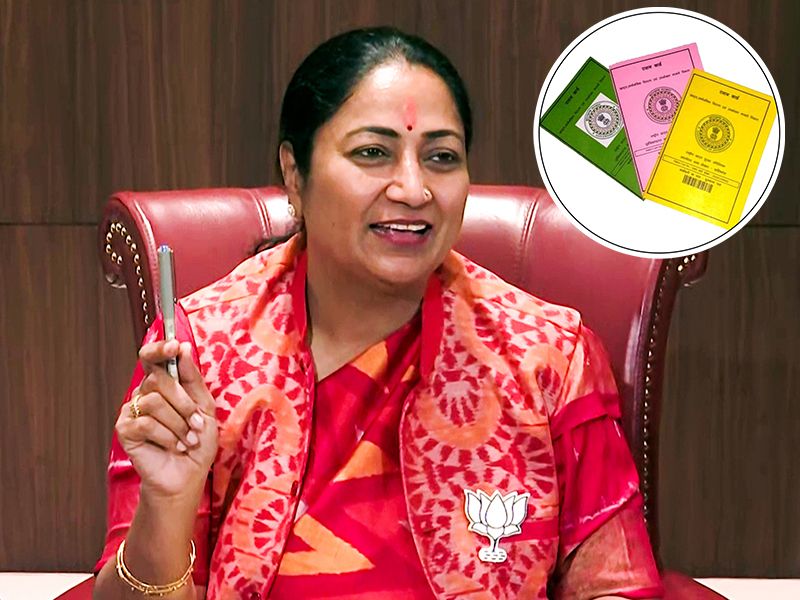
Delhi Chief Minister Rekha Gupta said on Thursday that people can once again apply for new ration cards in the capital after a gap of nearly 13 years. The fresh application system became active from May 15.
During a media briefing at the Delhi Secretariat, she asked low-income families to submit forms through the e-District website. She said the main aim is to make sure food support reaches families that need it the most.
The government has also reopened old pending files. Applicants whose forms were left incomplete in past years can now update their papers and upload fresh documents before sending the forms again.
After reviewing the ration system, Delhi Government officials found a large number of invalid names in records. According to official figures, more than 7.71 lakh names were removed during the checking drive.
Officials said over 6.46 lakh people did not match the income rules set for ration benefits. Around 95,000 card holders had not collected ration for over a year. Records also showed names of dead people and duplicate beneficiaries in several cases.
With these names removed, close to 7.72 lakh new spots are now free for eligible families.
The government shared that over 3.72 lakh requests for new ration cards and nearly 99,500 applications for adding family members are still waiting for clearance. Since many of these requests are old, people will now need to file forms again under the latest rules.
Rekha Gupta said Delhi has started work under the Delhi Food Security Rules, 2026 linked to the National Food Security Act, 2013. Several changes have also been made in ration shops to reduce fraud cases.
Electronic weighing machines are now being placed at fair-price shops in place of old machines. Fingerprint-based checking has also been made compulsory while giving ration to card holders.
The Chief Minister said all ration card work can now be completed online. This covers new applications along with adding or removing names from family records. People may also visit nearby service centres for help.
Under the updated process, applicants must submit Aadhaar cards, address proof, fresh income papers and Aadhaar details of all family members. Officials said stricter document checking will help stop fake entries.
Applications will pass through many levels before approval. Food and Supply Officers will first examine the forms online. Field visits may also take place in some cases. Assistant Commissioners will then review the checked forms before a district committee led by the District Magistrate gives final approval. Approved ration cards will later be downloaded online.
Rekha Gupta also said the yearly income limit for getting ration cards has already gone up from Rs. 1 lakh to Rs. 1.20 lakh. The government is now discussing another increase to nearly Rs. 2.5 lakh so more families can come under the food scheme.
Delhi Food and Civil Supplies Minister Manjinder Singh Sirsa said earlier governments had slowed down the ration card system for many years. He claimed this had stopped many needy families from getting food benefits.




A 29-year-old man died after falling from the 43rd floor of the Supernova Spira building in Noida’s Sector 94 on Saturday, October 3. Police suspect that he died by suicide.
The man was a Gurgaon resident and had booked a short stay at the building a day before the incident. Additional Commissioner of Police, Noida, Manisha Singh said he had checked into the building alone on Friday.
Police got a call about the incident at around 11:30 am on Saturday. A video from the site appears to show a few people on a balcony trying to help the man before he fell.
Police said the man may have been under stress due to money problems. During the early inquiry, officers found that he had sent messages to his father in recent days, saying that he did not want to live anymore.
The police also learned that he had not returned home for several days and had been staying at different places. He had booked the short-term stay at Supernova Spira, which is listed online, on Friday.
The family has been informed about his death. His body was sent for a post-mortem examination. A forensic team also visited the site and collected evidence.
Police are checking CCTV footage from the building and nearby areas. They are also speaking to people who were near the site when the incident took place. Police said the inquiry is still going on and all possible facts are being checked.
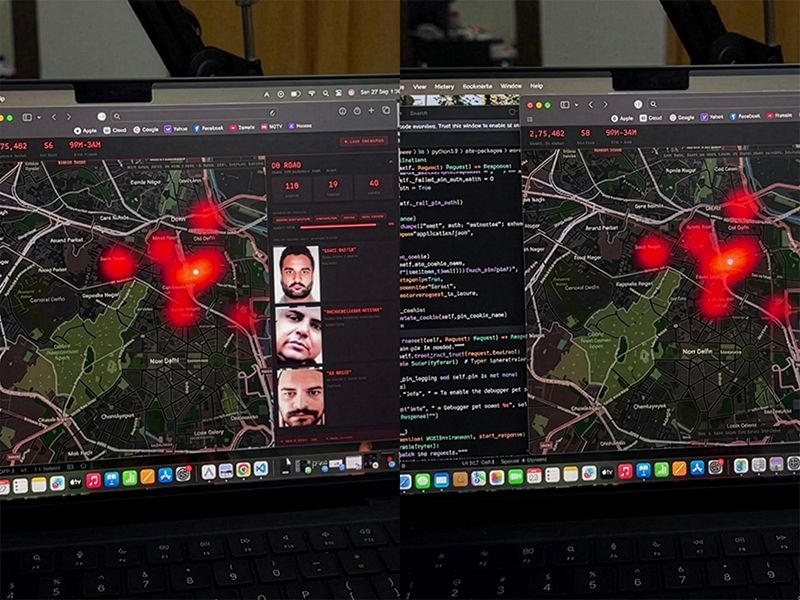
A Delhi man has drawn attention on social media after sharing a map that claims to show areas in the national capital where women may face a higher risk of crime.
Raj Gomani shared a video of the map on Instagram, saying he used public crime data to mark areas that may be unsafe for women, especially at night. He also said the map lists details about criminals linked to reported cases in those areas.
Gomani said he was disturbed that he had to carry out such an exercise for Delhi. He said the issue of women’s safety needs action instead of blame.
“I mapped unsafe areas for women in Delhi with the profiles of the criminals in that area,” Gomani said in his post.
He said he used public crime data from the National Crime Records Bureau (NCRB). He also said he looked at crime patterns during nighttime to identify locations where women may face greater risks.
“Blaming the government or the other gender won’t get us anywhere. The blood is on all our hands,” he said, calling for better use of resources in areas where safety risks are high.
The video soon gained a large number of views, with social media users asking for the map’s link. Some users said the map showed a sad side of life in India.
However, the accuracy of the map and the data used to create it could not be independently checked.
The post comes as several protests over women’s safety have taken place across India.
In Delhi, one recent protest followed the alleged gang rape of a 17-year-old girl at Aastha Kunj Park in South Delhi on September 21. The park is near Lady Shri Ram College. Three men were arrested in the case. Police alleged that the accused had posed as police officers before attacking the girl.
Another protest was held at Jantar Mantar on October 4 over allegations made by independent journalist Rosy. She accused a Delhi ACP of sexual harassment and joined hundreds of supporters in asking for an FIR against the officer. Reports later said that Rosy had been detained.
Gomani’s video described the map as a data-based tool showing parts of Delhi where women may face higher safety risks. The video said factors such as reported crimes, lighting and isolation were used while marking the areas.
The post was shared through the Instagram account ‘retardraj’ around five days before the article was published and received a large number of views.
While the post has led to a discussion about women’s safety in Delhi, the map’s findings should be checked against official crime records before being treated as an accurate guide to unsafe areas.

Delhi’s air quality continued to get worse on Sunday, marking the fifth straight day of rising pollution levels. The national capital also recorded one of its worst starts to October in recent years, based on data from the Central Pollution Control Board (CPCB).
The city recorded an average AQI of 187 at 4pm on Sunday. This falls in the “moderate” range and was Delhi’s highest AQI in 82 days.
Pollution levels had been rising since the end of September. Delhi recorded an AQI of 171 on Saturday, 174 on Friday and 166 on Thursday. The level had earlier been 129 before the recent rise began.
PM10 remains the main pollutant
PM10 was the main pollutant recorded in Delhi’s air. These particles are often linked to road dust, building work and farm fires.
The rise came after five days of “satisfactory” air quality. Rain and strong winds had helped clear pollutants from the city during that period. Once the rain stopped and winds became weaker, dust and other pollutants began to build up again.
Delhi’s AQI reached 197 at 9am on Sunday before falling a little later as wind speeds increased.
Mundka records the highest AQI
Pollution was high in several parts of Delhi. Of the 43 active monitoring stations, 14 recorded AQI levels in the “poor” range at 4pm.
Mundka recorded the highest AQI at 273. Mathura Road CRRI and Narela both recorded 257, while Jahangirpuri reported an AQI of 237.
Delhi Cantonment had the lowest AQI in the city at 97, which falls in the “satisfactory” range.
Jinitha Varghese, program manager at EnviroCatalysts, said rain in late September had helped lower pollution for a short period. After the rain stopped, warmer weather and weaker winds allowed dust and other pollutants to stay close to the ground.
She said Delhi needs lower pollution from several sources throughout the year. These sources range from power plants and factories to waste, heavy traffic, road dust and farm fires.
Pollution may rise further in the coming weeks
Delhi-NCR generally starts seeing higher pollution from around mid-September. Farm fires can add more smoke to the air as winter gets closer. Fireworks during the festive season, especially around Diwali, can also cause pollution levels to rise.
The Commission for Air Quality Management (CAQM) has said PM2.5 is a major pollutant during the winter months. Vehicle smoke, factory emissions, power plants and burning of plant waste can all add to the fine particles in the air.
Rain may bring some relief
Delhi recorded a minimum temperature of 24.1°C on Sunday, while the maximum temperature reached 36.4°C.
The India Meteorological Department (IMD) said the minimum temperature may fall to 21-23°C during the week. Monday is likely to remain clear, while partly cloudy weather may return from Tuesday. Very light rain is also possible on Tuesday.
Amateur meteorologist Navdeep Dahiya said mild western disturbances may affect the region from October 7. Another weather system may arrive after October 20 and could bring rain to parts of north India.
Rain could help lower pollution levels for a short time by washing some dust and particles out of the air.
CAQM finds road dust violations
The CAQM also found 17 violations linked to road dust and the build-up of construction and demolition waste during an inspection on Saturday.
Officials checked 25 stretches covering about 35 km of Delhi’s Inner and Outer Ring Road. The commission has asked the Public Works Department and other agencies to take action and fix the problems quickly.
With pollution already rising at the start of October, road dust, waste, traffic and other local sources remain key concerns for Delhi as the colder months approach.


29-Year-Old Dies After Fall From 43rd Floor of Supernova Spira in Noida

Delhi Man Maps ‘Unsafe Areas For Women’, Uses Crime Data To Flag Risk Zones

Delhi’s AQI Gets Worse as October Begins With High Pollution

CJP Leaders May Face Arrest Before October 10 Protest, Saurav Das Says

What Your Wedding Guest List Can Teach You About Master Data Management.

Pink Saheli Card Becomes Must-Have for Free Bus Rides in Delhi

Delhi Sanitation Worker Stabbed to Death While Collecting Garbage; AAP MLA Demands Action

Delhi Transporters Announce Parliament March Against E20 Fuel Policy

Abhijeet Dipke Ends His Hunger Strike After Sonam Wangchuk’s Appeal Before the Parliament March

IMD Issues Red Alert for Next 12 Hours, People Advised to Stay Indoors

Top 50 Most Influential Authors of 2021

Book Review of Debutant Author, T. Shree, ‘What If….’

Top 50 Most Influential Authors of 2023

Top 50 Most Influential Authors of 2022
This Restaurant In Delhi Serves Food Inside An Actual Airplane
First PUBG-Themed Restaurant opens in Jaipur

You Won’t Believe How AI Transformed Bollywood Divas into Stunning Barbies!

Yami Gautam Unveils Her New Avatar in ‘OMG 2’: Get Ready to Be Amazed!

Top 50 Most Influential Authors of 2024.

Exclusive Interview With The Author of ‘Daughter of the Night’ Nandini Gupta

Man Calms Angry Elephant, Tourists Stunned by the Spectacle

DTC Bus Driver’s Seizure Leads to Tragic Collision in Rohini, One Fatality

6 killed, 2 injured in Bus-SUV Collision on Delhi-Meerut Expressway | Video

Viral video alert: Man brushing his teeth on Delhi Metro gains millions of views

Shocking: Man rams car into a group of people after spat with a biker (Video)

Man steals the show as influencer grooves to ‘Dilbar’ on street
-
 News16 hours ago
Delhi’s AQI Gets Worse as October Begins With High Pollution
-
 Tech16 hours ago
What Your Wedding Guest List Can Teach You About Master Data Management.
-
 News16 hours ago
CJP Leaders May Face Arrest Before October 10 Protest, Saurav Das Says
-
 News2 days ago
Pink Saheli Card Becomes Must-Have for Free Bus Rides in Delhi
-
 News15 hours ago
29-Year-Old Dies After Fall From 43rd Floor of Supernova Spira in Noida
-
 News16 hours ago
Delhi Man Maps ‘Unsafe Areas For Women’, Uses Crime Data To Flag Risk Zones